
A whole-home generator can be a lifesaver during a power outage. You likely purchased a whole-home generator to protect your family and property from the consequences of power outages.
Servicing your whole-home generator in Tacoma, Washington, is part of keeping it in optimal condition so you can rely on it when you need it. But, how often should you schedule whole-home generator services?
This guide explains why generator servicing is crucial in Tacoma, the recommended service frequency, and signs that your generator needs service.
Why Regular Generator Servicing Is Critical for Tacoma Weather
In Tacoma, Washington, winters bring cold temperatures and the occasional winter storm. Having an operable whole-home generator is ideal for Tacoma homeowners. Here are a few reasons to get your generator serviced regularly.
Reliability
By servicing your generator, you can count on it when you need it. Regular maintenance prevents failures during emergencies, so you can rest assured your generator will keep your home powered during an outage.
Extended Lifespan
Proactive maintenance of your whole-home generator can significantly extend its lifespan. Generator services prevent corrosion and other issues, preventing costly repairs over time. Protect your investment and ensure it lasts by properly caring for it.
Optimized Performance
Whole-home generator services ensure that your generator runs efficiently, optimizing its performance. Simple checks, such as cleaning filters and changing the oil, can improve performance.
Enhanced Safety
Regular generator maintenance in Tacoma ensures the safety of your family and property. Whole-home generator service can detect issues such as oil leaks, electrical malfunctions, and carbon monoxide problems that need to be addressed promptly.
Factory-Recommended Maintenance Intervals Explained
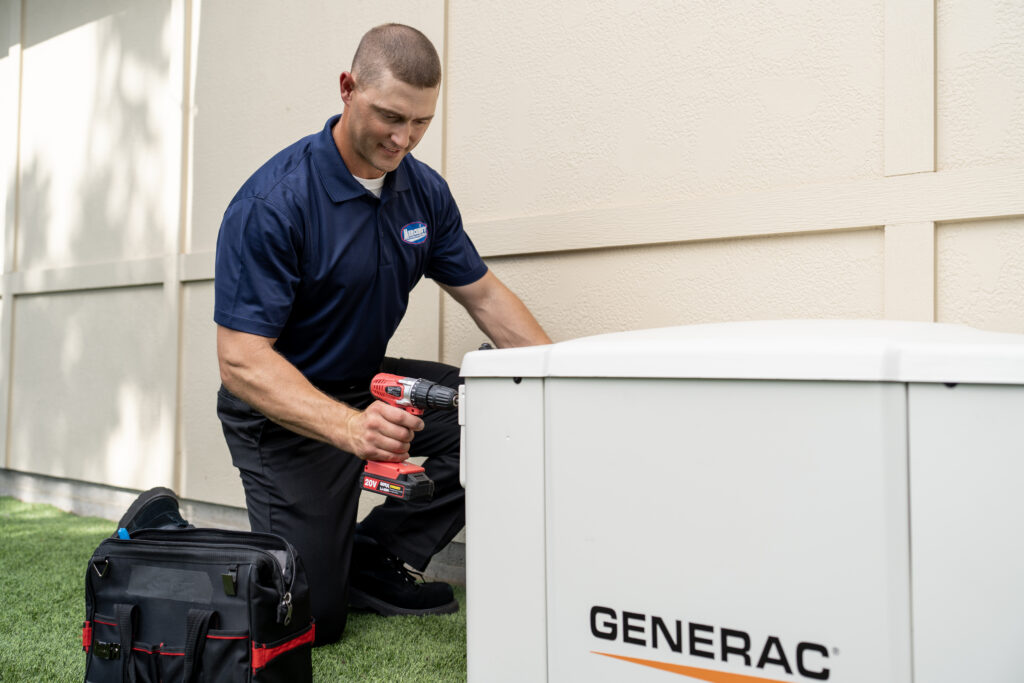
According to Generac, a leading home standby generator brand, some maintenance tasks should be performed at different intervals, such as before each use, annually, biannually, or every four years. Also, the frequency of recommended maintenance can depend on run-time hours.
We’re going to highlight the different maintenance tasks and when they should be performed to keep your whole-home generator running smoothly:
Before Each Use
Inspect enclosure louvers
Inspect enclosure louvers for dirt and debris to ensure proper ventilation before each use. Clear the louvers of any dirt or obstructions to support adequate airflow.
Inspect for fuel or oil leaks
Inspect lines and connections for fuel or oil leaks frequently to catch leaks early. Look for wet spots, stains, or discoloration on the ground around your whole-home generator. Check the hoses, fuel lines, and connections for cracks or loose fittings.
Check engine oil level
It’s essential to check the engine oil level daily during continuous use or before each use. Monitor oil levels with the dipstick before starting to ensure the generator has an appropriate supply.
Annually
Inspect for water intrusion
Checking for water intrusion ensures your whole-home generator operates effectively. Generators are not waterproof, and water intrusion can cause short circuits and permanent component damage.
Fuel system leak test
You should run a fuel system leak test at least once a year or every 100 hours to confirm proper operation and prevent leaks. By doing this annually, you can address potential failures promptly, ensuring the generator is ready to run when needed.
Every Two Years or 200 Hours
Battery health check
A battery health check includes checking the battery’s condition, electrolyte level, and the state of charge. It starts with a visual inspection to look for corrosion or physical damage. Then, a technician can clean the terminals and use a multimeter to measure the resting voltage.
Oil change and oil filter replacement
You should change the oil and replace the oil filter every two years or 200 hours of run time. Additionally, you will need to change the engine oil and oil filter after your generator’s break-in period, typically after the first 25 hours of run time.
Every Four Years or 400 Hours
Replace the engine air filter
The engine air filter needs to be replaced every four years or 400 hours. Replacing the air filter ensures the generator receives sufficient airflow and is critical to performance and efficiency.
Check spark plugs
Clean the spark plugs with a wire brush or a spray-on plug cleaner, inspect the spark plug gaps with a wire feeler gauge, and replace them if necessary every four years.
Inspect/adjust valve clearance
When applicable, inspect valves and seats for wear or damage. Clean the valve face if it is dirty or has deposits. If you adjust the valves, check that they seal properly.
Annual vs. Bi-Annual Inspections: What’s Right for You
Should you schedule annual or bi-annual inspections? This depends on how heavily you use your whole-home generator. Homeowners in Tacoma should schedule complete generator inspections every 200 hours of run time, whether it takes you one or two years to rack up that many hours.
If you are running your whole-home generator more than the average home, consider annual inspections. If you use your generator only lightly and perform routine maintenance, inspections every two years are appropriate.
When in doubt, contact Mercurio’s Heating & Air Conditioning for a professional opinion.
Common Signs Your Generator Needs Service Sooner
If you’re questioning whether your whole-home generator needs servicing, these are some of the signs you may be noticing:
Strange noises
Strange noises, such as rattling, grinding, knocking, or humming, can indicate a problem with your generator. Often, this signals loose components or internal wear and tear. If you notice unusual sounds coming from your generator, call a professional right away.
Leaks
Fuel, oil, or coolant leaks are major signs that your whole-home generator needs service. You should address any type of leak immediately to prevent damage to your unit. Additionally, leaks can cause your generator to malfunction, making it essential to address them before you need it in an emergency.
Difficulty starting
If your generator is having trouble starting up, it’s a clear indication that something needs to be fixed. Whole-home generators should automatically start during a power outage. If it doesn’t, it could be due to issues with the battery, fuel, or electrical system.
Battery failure
A worn battery may make starting difficult or affect overall generator reliability. If you notice unpredictable power output, your battery may be failing. Whole-home generator lithium-ion batteries typically last 10 years or more. If your generator system is getting older, it may be time for a battery replacement.
Inconsistent power output
If you notice lights flickering or appliances malfunctioning while running your generator, it may be delivering inconsistent power. This can be due to faulty parts or damage. Fluctuating voltage or frequent overload shutdowns are signs that you need whole-home generator services.
Schedule Routine Generator Maintenance with Mercurio’s
Now you understand how often to service your standby generator to promote reliable operation. Ensure your power outage readiness by scheduling generator maintenance today.
Follow the guidelines in this article to keep your generator dependable year-round. Book your professional generator service with Mercurio’s Heating & Air Conditioning today!