
Winters in Tacoma, Washington, bring low temperatures requiring efficient heating systems to stay warm and comfortable at home. Many Tacoma homes have older gas furnaces that may need troubleshooting throughout the winter season to remain effective.
This gas furnace troubleshooting guide will cover basic checks and common furnace issues that homeowners can handle. It will also share when to call a professional heating and cooling expert for furnace issues.
How Gas Furnaces Operate in Tacoma Homes
Gas furnaces work by following a basic operating sequence to provide steady heat in Tacoma’s damp and cold winter season.
- Thermostat signal: When the indoor temperature drops below what you’ve set the thermostat to, the thermostat will send a signal to the furnace to kick on.
- Ignition: An electronic ignition system will ignite the gas burner safely. Once the burner is lit, the flame produces a steady flow of heat.
- Heat exchanger warms: The flame then warms the heat exchanger, which transfers heat to the air without exposing your home to combustion gases.
- Blower distribution: The blower fan pushes the air across the heat exchanger and warms the air before distributing it through the ducts and into the room.
- Cycle ends: When the desired temperature is reached, the system shuts off until it is signaled by the thermostat again.
Understanding this basic operating sequence helps you identify at what point a problem might be occurring while troubleshooting why gas heating is not working.
Step-by-Step Furnace Troubleshooting Checklist
Now we’ve made it to the gas wall heater troubleshooting guide portion of the article. We’re going to address eight troubleshooting checks you can complete at home.
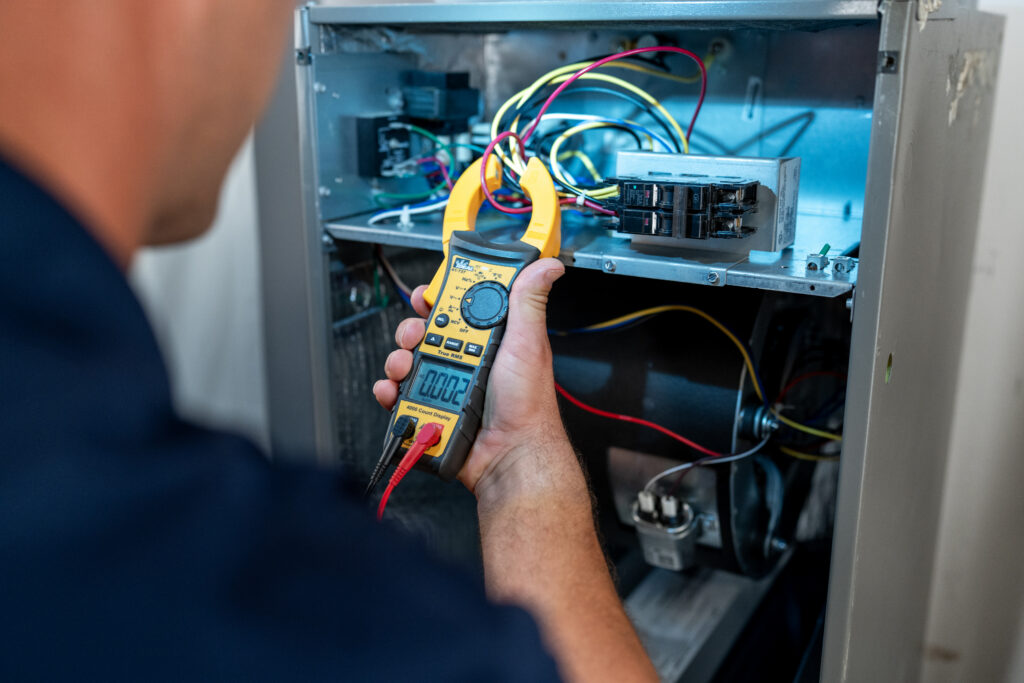
Please note that any work involving the gas supply, repeated shutdowns, or burner issues requires a licensed technician and should not be performed without their supervision.
- Verify thermostat mode and temperature
First things first — check to ensure that the thermostat is working properly. Verify that the thermostat is set to “Heat” mode and that the temperature is set higher than room temperature.
For example, the furnace will not run if the thermostat is set to 72°F and the current room temperature is 74°F. If you notice the screen is dim or blank, replace the batteries in your thermostat so it can effectively signal the furnace.
- Inspect and replace air filters
Next, inspect your air filters to see if they are dirty or clogged. Clogged or dirty air filters restrict airflow and can cause short cycling, overheating, or unexpected shutdowns. Clean or replace the air filter if it hasn’t been changed in over 1-3 months.
- Check the furnace power switch and breaker
Your furnace power switch is often mounted on the side of the unit or on a nearby wall. Be sure to confirm that it is set in the “On” position. It can sometimes be accidentally knocked and switched off.
If your furnace isn’t running, check the breaker panel to ensure the furnace breaker hasn’t tripped. If tripped, reset it only once. Repeated tripping requires a call to a professional electrician for a more serious issue.
- Ensure all vents are open
Blocked supply vents disrupt airflow, causing the furnace to work harder than necessary. Ensure all vents are unobstructed by rugs or furniture to promote the free flow of warm air throughout your home.
- Reset the furnace, if applicable
Some modern furnaces have a reset button on the actual unit. If your furnace has this, press the button once to reboot the system and clear minor faults. If the furnace trips again, call a professional to address the issue.
- Inspect pilot/ignitor—visual check only
Homeowners can look through the viewing window to confirm the pilot light is glowing and lit. If the pilot light is out, do not attempt to relight or repair it yourself. Call a professional heating and cooling company.
- Look for airflow issues or blockages
Be sure to check that all filters, vents, and air grilles are unobstructed. Blockages cause restricted airflow which can result in weaker heat output, overheating, or short cycling.
- Note any flashing diagnostic codes
Modern gas furnaces often have an LED light that flashes specific error codes. Pay attention if the light is blinking in a pattern and take note of the sequence to help determine the root issue.
Troubleshooting Common Furnace Symptoms
There is a plethora of common furnace issues that can be troubleshooted. Here are typical furnace symptoms and what each might indicate:
- Furnace not turning on: If your furnace won’t turn on, it points to thermostat issues, tripped breakers, or a shut-off furnace power switch.
- Furnace turning on but blowing cold air: If your furnace runs but isn’t heating the room, it indicates ignition failure, an extinguished pilot light, or that the system has overheated and shut off the burners.
- Short cycling: If your furnace is turning on and off frequently without completing a full cycle, clogged air filters, airflow restrictions, or malfunctioning thermostat sensors might be to blame.
- Burning or unusual smells: Burning odors might indicate electrical wiring issues, overheating components, or dust burning.
- Weak airflow or no airflow: Airflow issues often step from blockages to vents, dirty filters, or blower motor issues.
- Banging, rattling, or grinding noises: If you hear noises coming from your furnace, they can indicate loose components, ignition problems, or mechanical issues.
Understanding Gas vs. Electric Furnace Troubleshooting Differences
When your gas heating is not working or your furnace is not working at all, troubleshooting steps may differ based on whether you have a gas or electric system.
Gas furnaces depend on fuel supply and ignition. Homeowners can visually check the pilot light, whether the furnace switch is on, or if the diagnostic light is showing an error. However, any issues involving gas flow, ignition components, or the burner require a licensed professional.
Electric furnaces rely on electrical power and heating elements. Homeowners can check to make sure the breaker isn’t tripped, the thermostat has batteries, and that the furnace switch is on. They can run a full system reset to see if that fixes the issues. Issues with internal electrical components or heating elements should be left to professionals.
When Troubleshooting Is No Longer Enough
There are times when continuing DIY troubleshooting is unsafe or unproductive, and you need heating services in Tacoma.
Some common scenarios when furnace troubleshooting is not enough include:
- Persistent ignition failure
- Cracked heat exchanger concerns
- Repeated limit switch trips
- Blower motor failure
If you experience any of these issues while troubleshooting, stop what you’re doing and contact a professional heating and cooling company for furnace repairs.
Have Questions About Troubleshooting Your Furnace? Mercurio’s Can Help
Tacoma, WA’s damp coastal climate, older duct systems, and winter usage cycles can impact furnace performance. With increased moisture, salt air, and airflow restrictions, furnaces may experience elevated wear and tear.
For more furnace repair information and HVAC troubleshooting tips, visit our blog or reach out to us at (360) 499-2980 today. Our professionals can help you navigate furnace issues smoothly and safely.